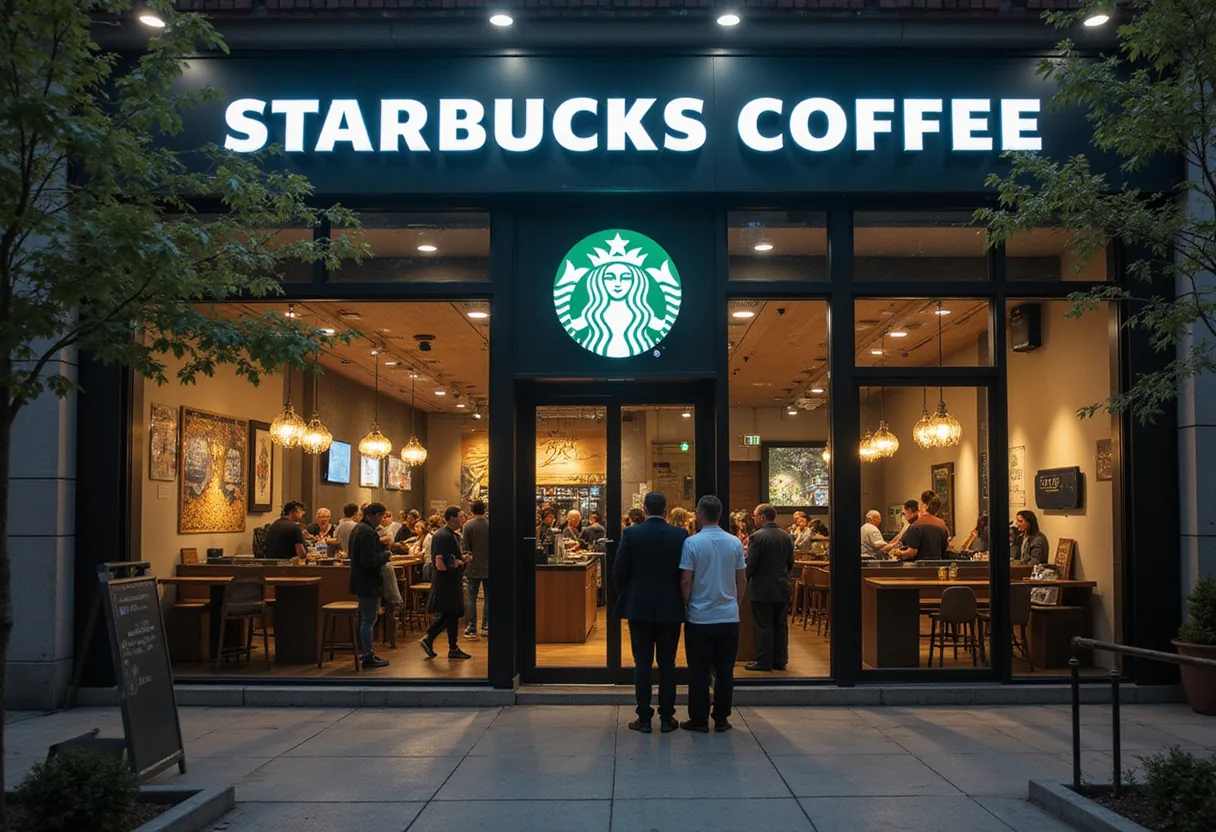
Starbucks widens its view: non-loyalty customers now count
Starbucks now treats customers outside its loyalty program as a vital part of its business, not just members of Starbucks Rewards. The company's stance, reported by CX Dive, marks a deliberate widening of how the coffee giant defines and serves its customer base.
The statement matters because Starbucks has long anchored its customer-experience strategy in Starbucks Rewards, one of the largest loyalty programs in food service. Treating non-members as vital signals that the company no longer views the program as the sole lens for customer value.
What does the position change?
For a brand of Starbucks' scale, publicly framing non-loyalty customers as vital shifts the emphasis of customer-experience work. Loyalty programs reward repeat, identified purchases. Customers who pay without joining leave less data behind, but they still shape revenue, store traffic, and brand perception.
By counting these customers as vital, Starbucks acknowledges that a meaningful share of its business comes from people the Rewards program does not directly track. That includes occasional visitors, travelers, and customers who choose not to share personal data — a group that grows as privacy expectations rise.
Why should marketing leaders care?
The move speaks to a broader question for CMOs: how to value customers you cannot easily identify. Loyalty programs deliver measurable retention and personalization benefits, but they can narrow a brand's view of its full audience. A strategy that treats only members as important risks under-serving the anonymous majority at the register.
Starbucks' position suggests a two-track approach:
- Keep the loyalty program as the core engine for personalization and repeat visits
- Ensure the baseline experience — speed, service, product quality — works for everyone, member or not
- Avoid gating the fundamentals of the experience behind program membership
How does this fit the loyalty playbook?
Starbucks built much of its modern marketing around Rewards, using the program to drive frequency, mobile ordering, and targeted offers. The new framing does not reverse that strategy. It adds a complementary one: the experience must stand on its own for customers who never enroll.
For brands with large loyalty programs, the implication is direct. Program membership is a relationship, not a prerequisite. Customers outside the program still decide whether the brand earns a second visit, a recommendation, or a return trip.
That logic aligns with how many consumer brands now segment their audiences: identified customers get personalization; unidentified customers get consistency. Starbucks appears to be applying the same split at global scale.
What is the practical takeaway for CMOs?
Three lessons emerge from the Starbucks position:
- Measure the unmeasured. Revenue from non-members deserves its own line of analysis, not just a residual category.
- Design the floor, not only the ceiling. The non-member experience sets the minimum standard; the loyalty program raises it.
- Treat loyalty as an invitation, not a gate. Customers who decline to join still buy, still return, and still talk about the brand.
The reporting from CX Dive gives no detailed figures on the share of Starbucks revenue that comes from non-members, and the company has not, in this instance, tied the position to a specific campaign or product change. The significance lies in the framing itself: one of the most loyalty-driven brands in food service is publicly stating that customers outside the program matter.
For marketing leaders weighing how much of their budget and attention to pour into loyalty mechanics, the Starbucks position is a reminder: the program is a tool, not the customer base. The base includes everyone who walks in — card or no card, app or no app.
Starbucks has not announced changes to Starbucks Rewards as part of this stance, and the position applies to how the company thinks about customers rather than to any single initiative reported so far.
Source: Google News: customer experience loyalty
Marcus Bennett
Show full bio
Correspondent covering money, funding and market shifts around marketing leadership at CMO Observer.