Webflow Customer Launched in 5 Weeks Against a 12-Week Plan; Airtable Cut Migration by Two-Thirds
Recent CMS migrations show AI drafting scripts, mappings and tests at record speed — while people still owned schema decisions, approvals and the final launch weeks that barely sped up at all.
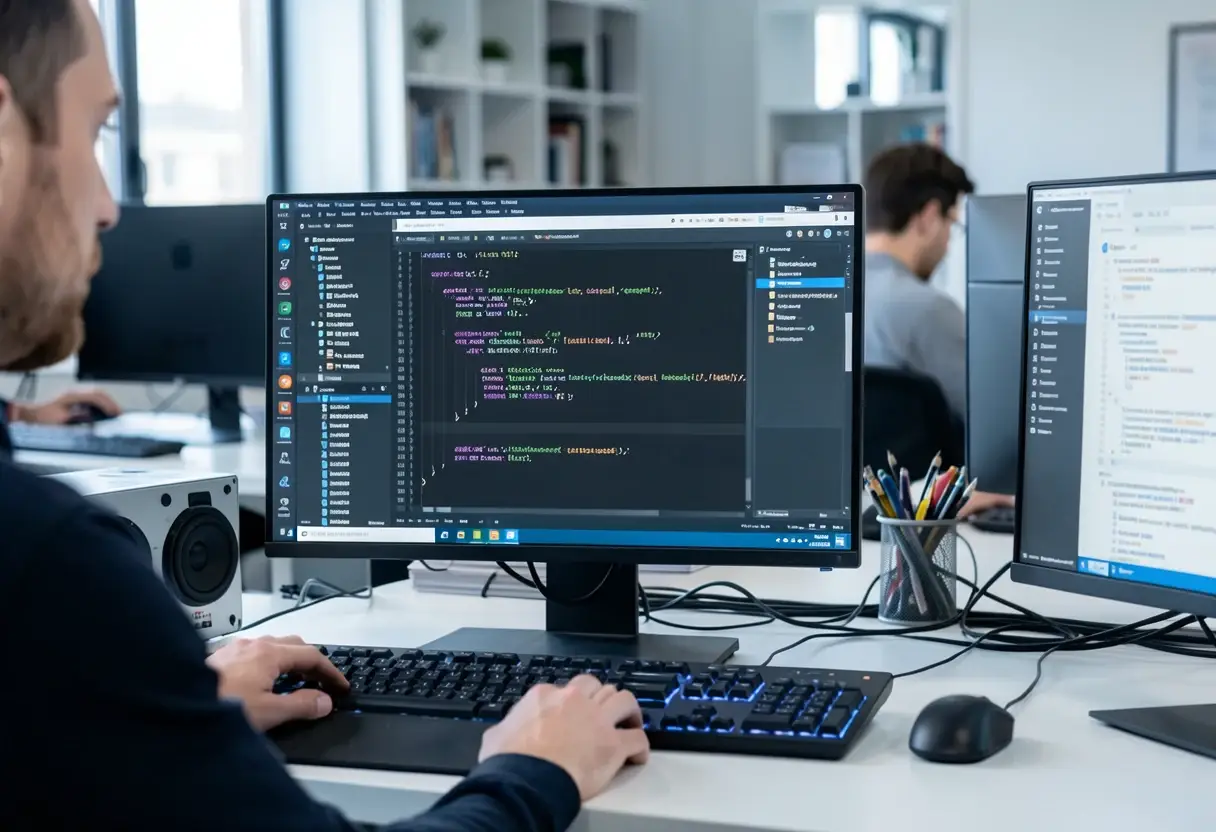
A Webflow customer migration covered roughly 200 static pages and 1,200 content items and launched in five weeks against an initial 12-week plan. That's the headline number from recent CMS replatforming projects, and it comes with a catch the marketing leaders writing the checks should understand: the final weeks — domain cutover, load testing, sign-offs — barely moved at all.
Contentstack's Pete Larsen, global head and VP of technical services, put it plainly: "The final weeks before launch were operational: domain cutover, load testing and sign-offs. AI didn't speed those up much, because they depend on people, permissions and approvals."
What did AI actually speed up?
On recent moves, generative AI wrote first drafts of migration scripts, content mappings, tests and redirects faster than any prior method. It found schema patterns, cleaned exported content, assembled test pages and ran automated browser checks.
The numbers vary. Meaza Abate, now a software engineering manager at Sanity, led Airtable's migration from a Digital Experience Platform and estimated AI reduced the timeline by at least two-thirds, comparing it with her work on Figma's Sanity migration in 2020–2021, before ChatGPT. "Using it to understand patterns and to write and run the migration scripts was a huge time saver," she said.
Tony Byrne, founder of Real Story Group, took the skeptical view: "only minor time and effort gains." He expected AI to accelerate content transformation between repository models but saw little added benefit for initial cleanup compared with established scripts.
Other results sat between those poles:
- Webflow's customer: five weeks versus a 12-week plan, with a redesign added and no cost breakdown isolating AI's contribution.
- QED42's own site: 646 public pages across 17 templates; AI-assisted reconstruction took three to four days, then another three to four weeks of architecture review, integration and redirect verification. The migration process had been through 14 generations before production.
- Crystal Coast Tourism Development Authority: finished on budget with review and rework included, after two engineers built the site from late August to mid-month, following June–August discovery and design. AI offset overruns rather than cutting the bill.
Why did these companies replatform in the first place?
At Airtable, editors wanted simpler previews and engineers were frustrated by the separation between schema creation and the web application. Abate also cited consolidating tools for experimentation, personalization and event management. Contract deadlines left an initial migration window of roughly a month; the team extended it deliberately. "We decided not to take our bad habits with us, so we extended the timeline and fixed schema issues during the migration," she said.
A U.S. financial services company, unnamed at its request, moved to Contentstack after years of expensive, required upgrades that added little capability. Its project included a full website redesign and migration of location pages, staff profiles and educational articles. It launched a few weeks ahead of schedule.
The broader market context is stark. A July 2026 Acquia-commissioned survey of 575 web developers by Coleman Parkes found 54% said reaching platform limits triggered their most recent CMS evaluation, and 53% said poor support for AI or agentic workflows would prompt them to leave a platform.
What decisions still needed people?
Webflow's Jon Saxton and Mary Jane Zorick, senior solutions architects, and Ben Parker, director, solutions architect, described using Webflow's MCP server (a protocol connecting AI tools to applications) with ChatGPT and the Figma MCP to assemble a test homepage and key pages in one day. People reviewed the pages as work progressed; Codex ran automated performance, accessibility and SEO checks.
The human judgment showed up in the details. During QED42's migration to Drupal 11, an early AI-generated version looked right visually but stored each component as JSON inside a single field. Engineers rebuilt it with native Drupal fields so editors could change headings, images and links individually. All 1,359 images displayed correctly, yet the media library held only two items; engineers registered them as reusable assets.
On Gong's migration, automated testing missed a trailing-slash issue affecting around 200 redirects, fixed in a single update. Philip Frilling, lead back-end engineer at Pare & Co., summarized the division: "AI completely changed who writes the first draft of our code, tests, and migration scripts. It didn't change who owns the hard decisions: People still decided what data survived, what got merged, and what got left behind."
Export limits also cap the gains. Larsen said: "Others limit how content can be exported and in what format, which caps how much AI can help from the start."
What does this change for buyers?
Byrne advises large enterprises to test whether a prospective CMS works with AI infrastructure they've already vetted, and to resist vendor pressure on architecture. "CMS vendors will show you AI candy in demos that in many cases you cannot (or should not) use in production," he said.
After launch, the payoff shows in publishing. SleekFlow's six-person team — two developers, two SEO specialists, two marketers — used AI agents to compare migrated pages with live originals, feeding recorded errors back as instructions. "If we did it again, we'd build automated checks for the AI agents from day one, instead of relying on written instructions alone," said Joy Liu, senior director of marketing. Marketers now update pricing pages without developers, and translations run inside the CMS.
Dustin Engel of Elegant Disruption, who moved to Framer with articles originating in Notion, framed the decision for every CMO: make it with post-launch work in mind. "Can your team confidently maintain what you build?"
Source: feeds2.feedburner.com
Filed under
More from Marcus Bennett
Show full bio
Correspondent covering money, funding and market shifts around marketing leadership at CMO Observer.
94 articles
Related articles




Read also
The newsroom digest
One email a day with the stories that matter. No noise.